Insights & resources
Meta Pixel vs Conversions API: A Guide for Australian Advertisers
Running Facebook and Instagram ads in Australia can involve more than choosing an audience and creating attractive advertisements. Businesses need reliable conversion tracking to understand which campaigns generate enquiries, actual revenue and purchases.
But ad blockers, browser privacy restrictions, and changing consumer expectations have made traditional website tracking less dependable. Australian advertisers are increasingly exploring Meta Pixel and Conversions API (CAPI) to improve campaign measurement.
Which tracking method can work better? More importantly, should businesses use both?
What Is Meta Pixel and How Does It Work?
The Meta Pixel will be a small piece of JavaScript installed on a website to monitor visitor actions. It can record events like product purchases, page views, enquiries and completed registrations.
For example, imagine a Melbourne furniture retailer running Instagram advertisements. When someone clicks an advertisement and purchases a dining table, Meta Pixel can send a purchase event to Meta.
As a result, advertisers can measure conversions, create remarketing audiences and help Meta optimise advertising campaigns.
Nevertheless, Meta Pixel depends on browser-based tracking. Therefore, browser restrictions, blocked scripts and technical issues can prevent some events from reaching Meta. Get details on Google Ads Management Services in Australia.
What Is Meta Conversions API?
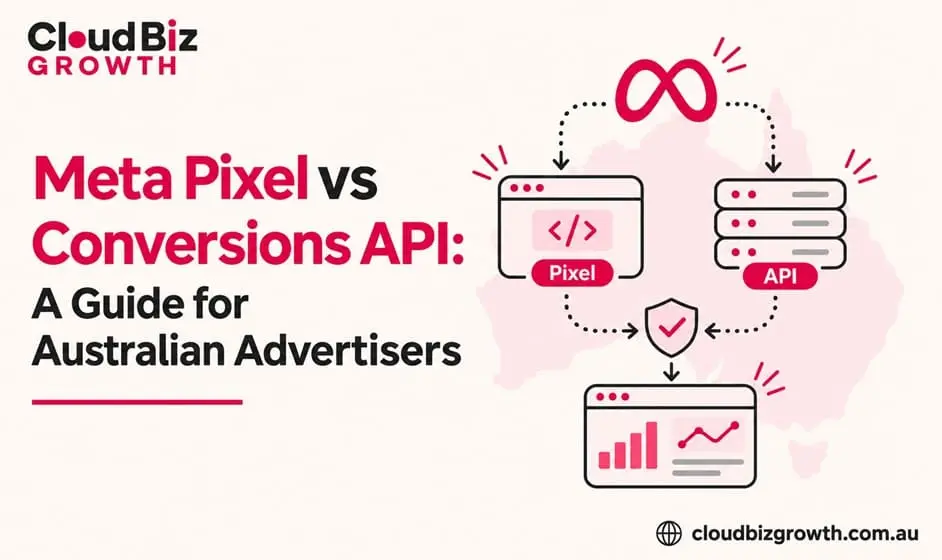
Meta Conversions API provides another way to communicate customer interactions directly from a business’s server, website platform or approved integration to Meta.
Unlike browser-based tracking, CAPI may transmit eligible conversion events through server connections.
For instance, an Australian online retailer may send confirmed purchase information through its eCommerce platform besides relying entirely on the customer’s browser.
CAPI may support eligible offline transactions. Also CRM-based lead events when configured correctly.
But server-side tracking may not automatically eliminate data loss or privacy obligations. Businesses will need accurate event information, appropriate permissions, and a properly maintained integration.
Meta Pixel vs Conversions API: Key Differences
| Feature | Meta Pixel | Conversions API |
| Tracking method | Browser-based | Server-side or platform integration |
| Data source | Website visitor’s browser | Server, CRM or eCommerce system |
| Browser restrictions | More directly affected | Less dependent on browser scripts |
| Implementation | Usually simpler | May need technical configuration |
| Offline events | Limited direct capability | Supports eligible offline events |
| Privacy compliance | Required | Required |
| Best application | Website behaviour tracking | Additional conversion measurement |
Both technologies can provide valuable information. However, combining Meta Pixel with Conversions API can offer more resilient measurement than relying on one method alone. Meta’s own training emphasises event coverage, matching quality, deduplication and data freshness.
Why Australian Advertisers Should Consider Both
1. Improve Conversion Tracking Accuracy
Browser-only tracking can miss customer actions. So combining Pixel and CAPI can recover some eligible events that would otherwise go unreported.
For example, a Brisbane home renovation company may receive website enquiries that its browser tracking fails to record.
With a correctly configured server connection, those enquiries can still reach Meta.
2. Support Better Advertising Optimisation
Meta may use conversion information to help its advertising system understand valuable customer actions.
Better-quality event data may support campaign optimisation, particularly if advertisers track meaningful outcomes like qualified leads and completed purchases.
But improved tracking may not guarantee lower advertising costs.
3. Understand Marketing Performance
Accurate measurement can help businesses compare advertising expenditure against actual results.
Consider this campaign:
| Campaign metric | Pixel-only reporting | Pixel + CAPI reporting |
| Advertising spend | A$2,000 | A$2,000 |
| Reported leads | 40 | 46 |
| Reported cost per lead | A$50.00 | A$43.48 |
Illustrative example only. Not actual performance results. Additional reporting can reflect previously unrecorded leads rather than new leads generated by CAPI.
So businesses must compare reported conversions with their CRM records before drawing conclusions about campaign performance.
Why Event Deduplication Matters
If businesses use Pixel and CAPI together, both systems can report the same purchase or enquiry.
Without correct configuration, Meta can count duplicate events.
To avoid this, advertisers must use matching event names and corresponding event identifiers across browser and server events.
For instance, the browser’s eventID must correspond to the server’s event_id for the same transaction.
Advertisers must use Meta Events Manager to review event quality, deduplication diagnostics and delivery.
Australian Privacy Laws and Conversion Tracking
Privacy compliance is essential for Australian advertisers. Especially when tracking personal or sensitive information.
The Australian Privacy Principles govern how covered organisations may collect, use and disclose personal information.
Importantly, the Office of the Australian Information Commissioner advises organisations to explain their use of third-party tracking pixels and assess their legal obligations. Sensitive information used or disclosed for direct marketing generally requires consent.
Therefore, businesses should review privacy notices, consent arrangements and the information transmitted to Meta.
CAPI should never become a workaround for visitors’ privacy choices.
Related Services:
» Website Design Services in Australia
» Magento SEO Services in Australia
» Wix SEO Services in Australia
» WordPress SEO Services in Australia
» WooCommerce SEO Services in Australia
» Shopify SEO Services in Australia
» Local SEO Services in Australia
How Cloud Biz Growth Can Help Australian Businesses
At Cloud Biz Growth, we understand that successful Meta advertising can require more than attractive creative and competitive bidding.
Our digital marketing approach will focus on campaign analysis, meaningful conversion measurement, and ongoing optimisation.
If you manage a service-based business in Melbourne, an eCommerce store in Sydney or a well-configured measurement system will help you make better advertising decisions.
Explore our Meta Ads Management Services to learn how Cloud Biz Growth can support your Australian advertising strategy.
Related Articles:
» Why Your Facebook Ads Generate Leads That Never Become Customers?
» How Much Does Meta Ads Management Cost in Australia?
» How Much Does Dental SEO Cost in Melbourne?
» Multi-Location SEO for Australian Businesses
» Meta Advantage+ Campaigns: Benefits, Limits and Management
Choosing the Right Tracking Strategy for Better Meta Ad Performance
Choosing between Meta Pixel vs Conversions API should not be an either-or decision for most advertisers.
Instead, businesses should consider a combined implementation that improves event coverage, avoids duplicate conversions and respects customer privacy.
Reliable tracking can help Australian advertisers understand performance, invest their marketing budgets more confidently and reduce reporting blind spots.
FAQs: Meta Pixel vs Conversions API
1. What is the main difference between Meta Pixel and Conversions API?
Meta Pixel can track website interactions through a visitor’s browser. Whereas Conversions API can send eligible events through server-side connections. Both can help Australian advertisers measure campaign performance. But combining them can improve tracking reliability.
2. Do Australian businesses need both Meta Pixel and Conversions API?
Many Australian businesses can benefit from using both technologies, particularly if they depend on Facebook and Instagram advertising for enquiries or sales. Together, they may provide more complete conversion measurement. Cloud Biz Growth will help businesses assess which implementation suits their advertising requirements.
3. Does Conversions API improve Facebook Ads performance?
Conversions API may improve the quality and coverage of conversion signals sent to Meta. Consequently, Meta can have better information for campaign optimisation and reporting. But advertising results can depend on creative quality, targeting, budget and customer demand.
4. Is Meta Conversions API compliant with Australian privacy laws?
Meta Conversions API may form part of a privacy-compliant advertising setup when businesses meet their applicable legal obligations. Australian organisations should consider lawful information handling, privacy notices, and relevant consent requirements. So implementing CAPI may not automatically establish compliance.
5. Can Shopify and WordPress websites use Meta Conversions API?
Yes. Shopify and WordPress websites may support Conversions API through compatible integrations, plugins or custom configurations. But integration features and setup requirements can vary. Businesses must test event delivery and deduplication before relying on the reported results.
6. Who can help Australian businesses configure Meta Pixel and Conversions API?
Cloud Biz Growth can support. Australian businesses with Meta advertising strategy, campaign optimisation and conversion measurement. Businesses may seek assistance with reviewing event tracking and identifying reporting gaps. A properly planned setup may provide a stronger foundation for future advertising decisions.