Insights & resources
How AI Search Is Changing Local Business Discovery
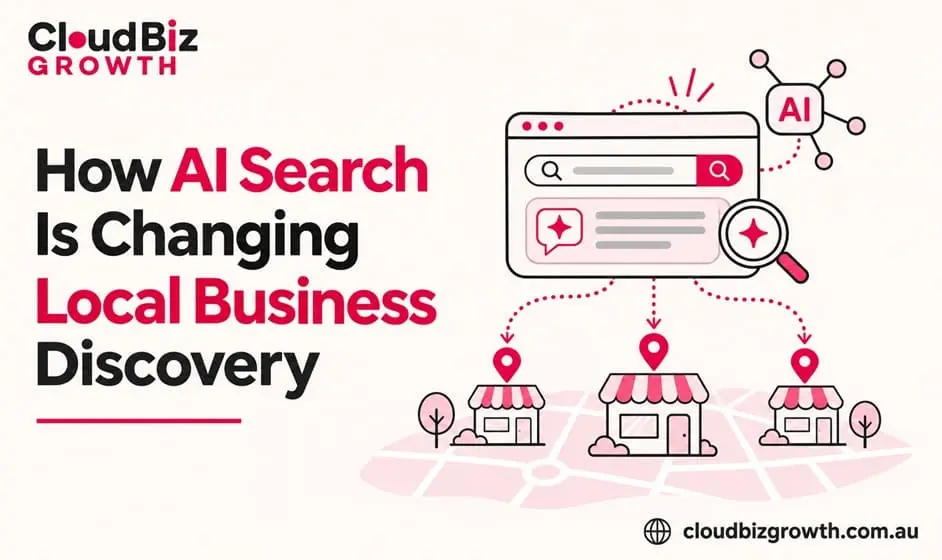
People once searched phrases such as “plumber near me” and compared a list of websites. Now they can ask an AI search tool, “Who can fix a leaking tap in Carlton this afternoon, and what should I ask before booking?” The search tool will interpret the request and consider location and other details. Also present a short answer with business suggestions and links.
That shift is changing local business discovery. Customers will get a quick summary before they visit a website or call. For local businesses, websites and review platforms help people clarify information across search listings, and search systems can understand what the business offers.
From keyword searches to complete questions
Traditional searches can often use short phrases. AI search will encourage people to describe what they need in everyday language. They will mention a suburb, opening hours, budget, urgency or a particular service in one question.
AI features will summarise information from more than one source. Also show links that help users explore further. Google says its AI search features will rely on its core Search systems. ChatGPT Search will use location information to provide more relevant local results.
As a result, a business may be discovered through a detailed question instead of one broad keyword. A café could appear in response to a request for “a quiet café near the station with vegan breakfast options,” for example. The business needs accurate, useful details online for that information to be understood. Get details on SEO Services in Newcastle.
What matters in local AI discovery?
AI search can draw on different kinds of public business information. A well-maintained Google Business Profile, recent customer reviews and a useful website will help potential customers assess whether a business will suit their needs. Google will recommend keeping Business Profile details up to date as part of its guidance for appearing in AI features.
| Business information | Why it helps customers |
| Correct name, address and phone number | Helps people confirm where the business is and how to contact it |
| Current opening hours and service area | Sets clear expectations before someone visits or makes an enquiry |
| Specific service and location pages | Explains what the business does and which suburbs it serves |
| Recent, genuine customer reviews | Gives people first-hand experiences to consider |
| Clear prices, booking steps or policies | Answers practical questions before a customer gets in touch |
But no single listing or piece of markup will guarantee that an AI tool will recommend a business. Search systems can select and present information in different ways. Strong local SEO will depend on accessible pages, accurate details, and helpful content. Looking for a SEO Services in Gold Coast?
Make your website easy to understand
A website must explain the essentials without making visitors hunt for them. State what you do, who you help, where you work, and how customers can take the next step. For instance, a service page can describe emergency callouts, typical response times, suburbs covered, and the best way to book.
You have to create separate pages for distinct services or locations when each page can offer useful information. Simply swapping suburb names across near-identical pages will leave customers with little value. But include relevant details: local projects, travel areas, service limitations, or answers to questions people in that location commonly ask.
Use straightforward headings and short FAQ answers. These can help people scan a page and make it easier to find specific details. LocalBusiness structured data will describe details like business hours. But it must match visible information on the website.
Related Services:
» Shopify SEO Services in Australia
» WooCommerce SEO Services in Australia
» WordPress SEO Services in Australia
» Wix SEO Services in Australia
» Magento SEO Services in Australia
» BigCommerce SEO Services in Australia
Keep business details consistent
Old phone numbers, outdated hours, and conflicting addresses will create friction. Review your website and Business Profile. Also review other important listings regularly. When your business changes its service area or adds a new service, you can update the relevant pages and profiles.
Reviews will matter to the customer’s decision. Ask customers for honest feedback. Respond professionally and address recurring concerns. Avoid scripted or misleading review tactics. Genuine feedback will give prospective customers a clearer picture of the experience.
Related Articles:
» Multi-Location SEO for Australian Businesses
» Google Maps SEO: How Local Rankings Work?
» Local SEO Checklist for Australian Small Businesses
» Meta Ads for Shopify and WooCommerce Stores
» Meta Advantage+ Campaigns: Benefits, Limits and Management
AI search supports the local SEO basics
There is no guaranteed shortcut to appearing in an AI-generated local answer. Google’s guidance says established SEO practices will remain relevant for AI features. This includes making content accessible. Also keep business information current.
For a practical starting point, you have to check that search engines can access your key pages and confirm your contact details and opening hours. Also make each service page useful to a real customer. Then monitor calls, bookings, direction requests and website enquiries. Rankings will provide context. But real customer actions will show if your online presence is helping people choose you.
AI search is changing how customers ask for local recommendations. Also, how they review options. Businesses that maintain accurate listings, explain their services clearly, and earn customer trust give people better reasons to take the next step.
FAQs: How AI Search Is Changing Local Business Discovery
1. What is AI search for local businesses?
AI search uses artificial intelligence to interpret a person’s question and present a summarised response. It can use location and online business information to help people find relevant local options.
2. Does local SEO still matter for AI search?
Yes. Clear, accessible website content and accurate business details remain useful. Google says its existing SEO best practices will continue to apply to AI features in Search.
3. How can I help customers find my business in AI search?
Keep your business profiles accurate. Explain your services and service areas on your website. Also make contact and booking details easy to find. These steps will help customers evaluate your business.
4. Do I need a separate page for every suburb?
Only when you can provide useful information for each location. Create pages that explain relevant service coverage or local details rather than repeating the same copy with suburb names changed.
5. Do customer reviews affect local discovery?
Reviews help potential customers understand other people’s experiences. They form one part of a business’s online presence, alongside accurate listings and useful website information.
6. Can structured data guarantee an AI recommendation?
No. Structured data will describe details like opening hours. But it does not guarantee a specific ranking or recommendation. Make sure it matches the information customers can see on your site.